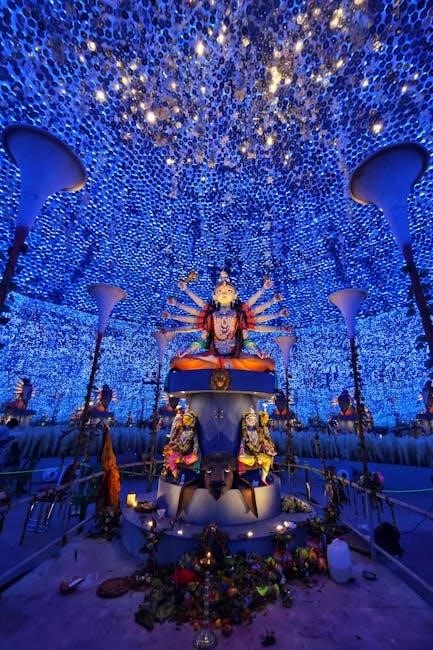
Hinduism’s rich tapestry features a vast, complex pantheon, often documented in comprehensive PDF lists detailing numerous deities․
These divine beings, like Vishnu, Shiva, and Devi, are seen as manifestations of Brahman, the ultimate reality, and are categorized into primary and secondary figures․
Exploring this divine realm requires understanding the interconnectedness of these gods and goddesses, as evidenced by resources offering detailed chronologies and dynastic overviews․
The Significance of the Divine Pantheon
Hinduism’s divine pantheon isn’t simply a collection of gods and goddesses; it represents a profound understanding of the universe and humanity’s place within it․ The extensive list of deities, often found in detailed PDF resources, reflects the multifaceted nature of the divine․
Each deity embodies specific qualities, powers, and cosmic functions, offering devotees diverse avenues for worship and connection․ This allows for a personalized spiritual journey, catering to individual needs and inclinations․ The pantheon’s structure, including the Trimurti and the Divine Feminine, illustrates the cyclical nature of existence – creation, preservation, and destruction․
Furthermore, the stories and myths surrounding these deities provide moral guidance, philosophical insights, and cultural narratives․ Accessing comprehensive lists and databases helps unravel the intricate relationships and symbolism inherent within this sacred framework, enriching understanding of Hinduism’s core tenets․
Understanding Brahman and its Manifestations
At the heart of Hinduism lies the concept of Brahman – the ultimate, unchanging reality underlying all existence․ This singular, formless principle manifests in countless gods and goddesses, forming the diverse divine pantheon detailed in extensive PDF lists․
These deities aren’t separate entities but rather different expressions or aspects of Brahman, making them interconnected and interdependent․ Understanding this is crucial; each deity embodies specific qualities and functions, allowing devotees to connect with Brahman through relatable forms․
The Trimurti – Brahma, Vishnu, and Shiva – exemplifies this, representing creation, preservation, and destruction, respectively; Similarly, the Divine Feminine, encompassing goddesses like Lakshmi and Saraswati, showcases Brahman’s nurturing and empowering aspects․ Exploring comprehensive resources clarifies these complex relationships, revealing Brahman’s infinite manifestations․
The Trimurti: The Primary Deities
Hindu cosmology centers on the Trimurti – Brahma, Vishnu, and Shiva – representing creation, preservation, and destruction, often detailed in comprehensive PDF deity lists․
Brahma: The Creator God
Brahma, the first god in the Hindu Trimurti, is revered as the creator of the universe and all beings, a concept often explored in detailed PDF guides listing Hindu deities․
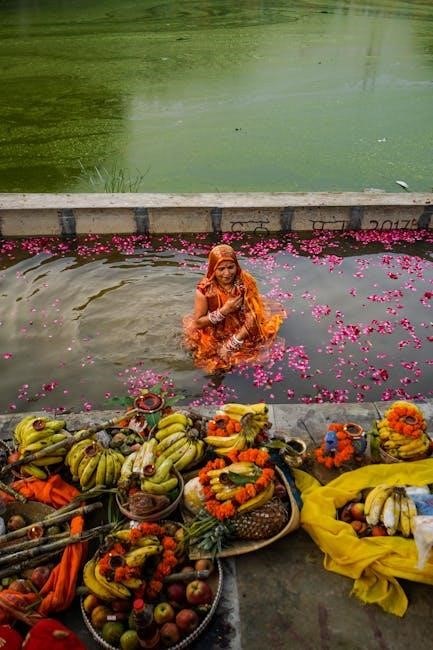
Depicted with four faces symbolizing the four Vedas, he represents the cosmic mind and its expansive knowledge․ While central to creation narratives, Brahma’s worship is less prevalent than that of Vishnu or Shiva․
His consort, Saraswati, the goddess of knowledge and arts, embodies the creative energy that fuels his work․ Ancient texts and scholarly resources, sometimes available as downloadable PDFs, delve into Brahma’s complex mythology․
These resources often present a complete list of associated deities and his role in the cyclical nature of creation, preservation, and destruction․ Brahma’s importance lies in initiating the cosmic dance, setting the stage for existence itself․
Vishnu: The Preserver God
Vishnu, the preserver within the Hindu Trimurti, maintains cosmic order and protects the universe, frequently detailed in comprehensive PDF lists of Hindu gods and goddesses․
He is often depicted as a blue-skinned deity, reclining on the serpent Shesha, symbolizing eternity and cosmic waters․ Vishnu’s primary role is to descend to Earth in various incarnations, known as avatars, to restore dharma (righteousness)․
These avatars, like Rama and Krishna, are central to Hindu mythology and are extensively documented in scholarly works, often available as downloadable PDFs․

Resources outlining a complete list of avatars provide insight into Vishnu’s compassionate nature and his commitment to safeguarding the universe․ His consort, Lakshmi, embodies prosperity and grace, complementing his preserving power․
Avatars of Vishnu: A Detailed List
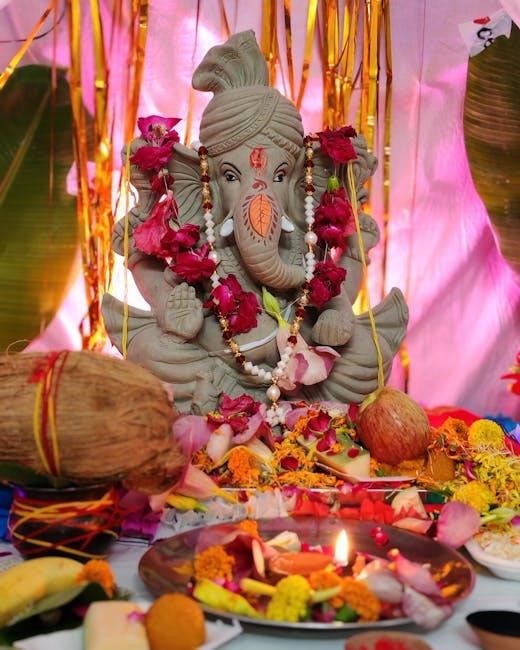
Vishnu’s ten primary avatars, meticulously cataloged in numerous PDF resources detailing Hindu deities, represent his interventions in cosmic history․ These incarnations, often presented in comprehensive lists, address periods of dharma’s decline․
Matsya, the fish, saved humanity from a great flood; Kurma, the tortoise, supported Mount Mandara during the churning of the ocean․ Varaha, the boar, rescued Earth from the depths, while Narasimha, the half-man, half-lion, defeated Hiranyakashipu․
Vamana, the dwarf, subdued Bali, and Parashurama, the warrior, restored order to the Kshatriya caste․ Rama, the righteous king, embodies ideal virtue, while Krishna, the divine statesman, imparted the Bhagavad Gita․
Buddha, though debated, is included by some, and Kalki, the future avatar, is prophesied to restore dharma at the end of Kali Yuga; These avatars, found in detailed PDFs, showcase Vishnu’s diverse forms and purposes․
Shiva: The Destroyer God
Shiva, a central figure in the Hindu pantheon – often detailed in extensive PDF lists of gods and goddesses – embodies both destruction and renewal, crucial for cosmic balance․
He’s not merely a force of annihilation, but a transformer, dismantling the old to make way for the new․ Resources cataloging Hindu deities highlight Shiva’s complex nature, encompassing asceticism, power, and compassion․
His various forms, like the fierce Bhairava and the benevolent Dakshinamurthy, demonstrate this duality․ Shiva’s association with time and cycles is prominent, reflecting the continuous process of creation and dissolution․
Studying Shiva, through comprehensive PDF guides, reveals his importance in understanding the cyclical nature of existence and the interconnectedness of all things within the Hindu cosmology․
Forms of Shiva: Nataraja and Others
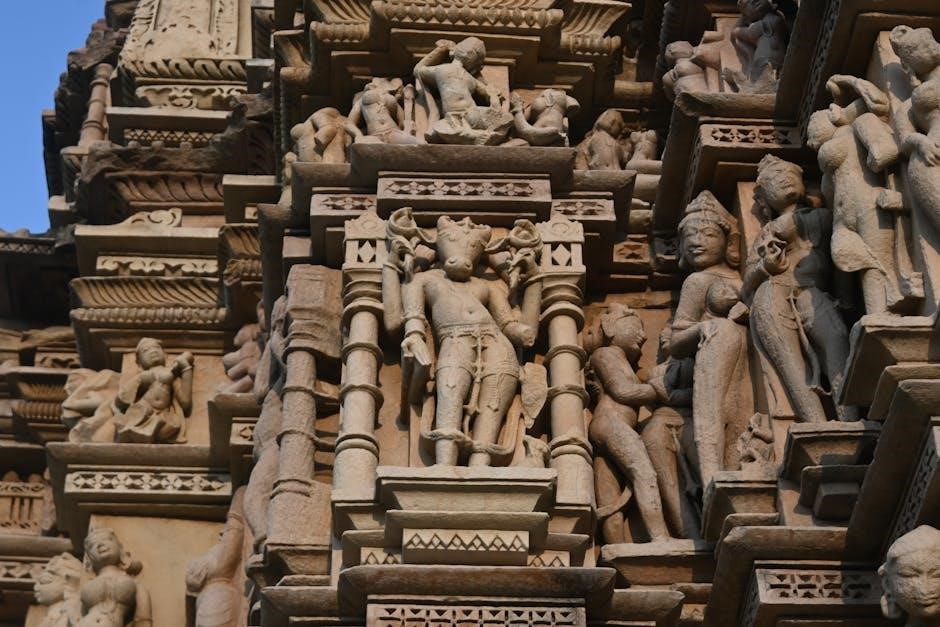
Shiva manifests in numerous iconic forms, extensively documented in PDF compendiums of Hindu deities, each representing a specific aspect of his power and nature․
Nataraja, the Lord of Dance, is perhaps the most recognizable, symbolizing the cosmic cycles of creation and destruction through his dynamic pose․ These forms are often detailed in scholarly resources․
Other significant representations include Lingam, an abstract symbol of Shiva’s generative power, and Bhairava, a fierce manifestation associated with protection and destruction․
Comprehensive lists, often available as PDF downloads, also detail forms like Dakshinamurthy, the teacher, and Ardhanarishvara, representing the union of Shiva and Shakti․
Exploring these diverse forms, through detailed guides, provides a deeper understanding of Shiva’s multifaceted personality and his role in the Hindu universe․
The Divine Feminine: Goddesses and Their Power
Hindu goddesses, detailed in extensive PDF lists, embody Shakti – divine energy – and are central to worship, representing power, creation, and nurturing;
Shakti/Devi: The Universal Mother Goddess
Shakti, also known as Devi, represents the dynamic, feminine energy underpinning all creation within Hinduism, often comprehensively cataloged in detailed PDF resources listing the expansive pantheon․
She is the supreme goddess, the embodiment of power, and the source from which all other goddesses emanate, a concept frequently explored in scholarly works and accessible online databases․
Devi manifests in numerous forms, each representing a different aspect of her multifaceted nature, from the gentle and nurturing to the fierce and destructive, as documented in various texts․
Her worship is widespread, encompassing diverse traditions and rituals, and her importance is highlighted in numerous scriptures and philosophical treatises, often available for study․
Understanding Shakti/Devi is crucial to grasping the core tenets of Hindu cosmology and the interconnectedness of all existence, as detailed in comprehensive guides and academic analyses․
Lakshmi: Goddess of Wealth and Prosperity
Lakshmi, the radiant goddess of wealth, fortune, love, and prosperity, holds a central position in the Hindu pantheon, frequently detailed within extensive PDF compendiums of Hindu deities․
She is often depicted as a beautiful woman adorned with gold, symbolizing material abundance and spiritual fulfillment, a visual representation found in numerous artistic depictions and scholarly resources․
Lakshmi’s blessings extend beyond mere material wealth, encompassing auspiciousness, good fortune, and the ability to achieve one’s goals, as explained in various scriptures and philosophical texts․
Her consort is Vishnu, and together they represent the harmonious balance between power and prosperity, a dynamic often explored in mythological narratives and academic analyses․
Devotees invoke Lakshmi’s grace through dedicated prayers and rituals, seeking her blessings for success, abundance, and a fulfilling life, information readily available in online databases․
Saraswati: Goddess of Knowledge and Arts
Saraswati, the revered goddess of knowledge, music, arts, wisdom, and learning, is a prominent figure within the expansive Hindu divine realm, often comprehensively cataloged in detailed PDF lists of Hindu gods and goddesses․
She is typically portrayed as a graceful woman dressed in white, symbolizing purity and enlightenment, frequently depicted playing the veena, a musical instrument representing harmony and creativity․
Saraswati embodies the power of speech, intellect, and artistic expression, inspiring individuals to pursue knowledge and cultivate their creative talents, as detailed in ancient scriptures․
Students, scholars, and artists alike venerate Saraswati, seeking her blessings for success in their endeavors and the attainment of wisdom, a practice documented in various religious texts․
Her influence extends to all forms of learning and artistic creation, making her a vital deity for those seeking intellectual and creative fulfillment, information accessible through online resources․
Durga/Parvati: Warrior Goddess and Consort of Shiva
Durga and Parvati, often considered aspects of the same powerful goddess, represent strength, protection, and divine feminine energy, frequently detailed within extensive PDF compilations of Hindu gods and goddesses․
Parvati is revered as the loving consort of Shiva, embodying devotion and domestic harmony, while Durga manifests as a fierce warrior goddess, vanquishing evil and restoring cosmic order․
Depicted riding a lion or tiger, Durga wields multiple weapons, symbolizing her power to overcome obstacles and protect her devotees, a narrative found in sacred texts․
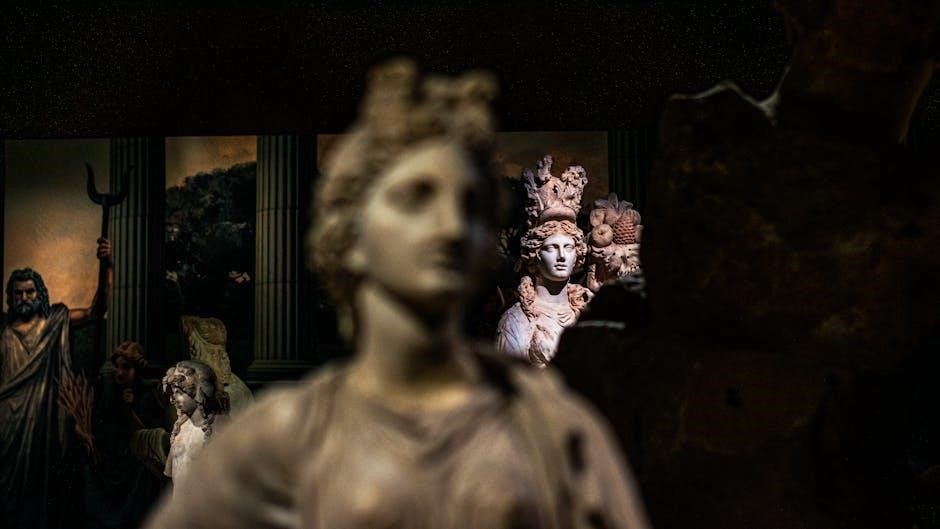
Her festivals, like Durga Puja, are celebrated with immense fervor, honoring her victory over the demon Mahishasura, representing the triumph of good over evil․
Understanding her dual nature—nurturing Parvati and fierce Durga—is crucial to grasping the complexities of the divine feminine within Hinduism, information readily available online․
Important Secondary Deities
Hindu tradition includes numerous secondary deities, often listed in comprehensive PDF guides, like Ganesha, Kartikeya, Hanuman, and Surya, each with unique roles․
Ganesha: The Remover of Obstacles
Ganesha, easily recognizable by his elephant head, is arguably the most beloved and widely worshipped deity in the Hindu pantheon․ Often appearing in detailed PDF compendiums of Hindu gods and goddesses, he embodies wisdom, intellect, and auspicious beginnings․
He is invoked at the start of any undertaking, be it a new business venture, a journey, or a religious ceremony, to remove obstacles and ensure success․ His large ears symbolize attentive listening, while his broken tusk represents sacrifice․
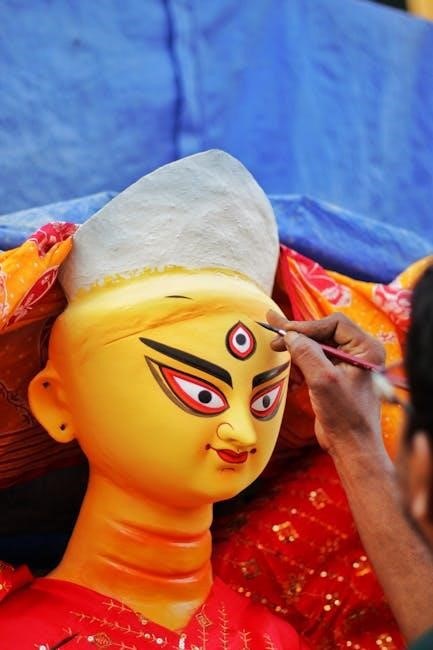
Representations of Ganesha frequently appear alongside other deities, signifying his universal appeal and importance․ Many lists of Hindu deities highlight his role as the son of Shiva and Parvati, and his brother Kartikeya․ He is also associated with learning, arts, and sciences, making him a patron god for students and scholars․
Kartikeya/Murugan: God of War
Kartikeya, also known as Murugan in South India, is the Hindu god of war, courage, and victory; Frequently featured in comprehensive PDF resources detailing Hindu deities, he is often depicted riding a peacock, wielding a spear (vel), symbolizing his power to vanquish evil․
As the son of Shiva and Parvati, he embodies youthful energy and divine strength․ Many lists of Hindu gods position him as the commander-in-chief of the divine armies, leading them to victory against demons․ His birth story, involving six Krittika mothers, explains his name Kartikeya․
Worship of Murugan is particularly prevalent in Tamil Nadu, where he is revered as the primary deity․ He represents not just martial prowess, but also ethical conduct and spiritual discipline․ His devotees seek his blessings for courage, protection, and success in their endeavors․
Hanuman: The Devotee and Warrior
Hanuman, a central figure in the Ramayana, is revered as a symbol of devotion, strength, and selfless service within Hinduism․ Detailed PDF guides listing Hindu gods and goddesses consistently highlight his unique status as a chiranjivi – immortal․ He is often depicted as a powerful monkey god, assisting Lord Rama in his quest to rescue Sita․
His unwavering loyalty and extraordinary abilities, including flight and immense strength, make him a popular deity․ Many comprehensive lists categorize him as a semi-divine being, a manifestation of Shiva’s power․ Hanuman’s devotion is considered the epitome of bhakti (devotion)․
Worship of Hanuman is widespread, with devotees seeking his blessings for courage, protection, and overcoming obstacles․ Temples dedicated to him are found throughout India and beyond, showcasing his enduring significance․
Surya: The Sun God
Surya, the radiant Hindu sun god, occupies a prominent position in the vast pantheon, frequently detailed in comprehensive PDF lists of Hindu deities․ He is considered a principal deity, representing energy, vitality, and the source of all life․ Often depicted riding a chariot pulled by seven horses, symbolizing the seven colors of the rainbow, Surya’s importance transcends mere astronomical observation․
Ancient texts, often compiled into accessible PDF formats, describe Surya as a powerful and majestic figure, capable of both nurturing and destroying․ He is associated with health, healing, and spiritual enlightenment․
Worship of Surya, known as Ravi, is ancient and continues today, with dedicated temples and rituals performed to honor his life-giving energy․ His presence is consistently noted in detailed catalogs of Hindu gods and goddesses․
Other Notable Gods and Goddesses
Hindu cosmology includes numerous lesser deities, often cataloged in extensive PDF lists, enriching the divine landscape with diverse roles and narratives․
Indra: King of the Gods and Lord of Heaven
Indra, a prominent figure within the Vedic and Puranic traditions, reigns as the King of the Gods and sovereign of Svargaloka, the heavenly realm․ Often depicted wielding the Vajra (thunderbolt), a symbol of power and authority, Indra commands the elements and presides over the heavens, rainfall, and storms․
Historically, Indra held a paramount position, frequently featured in hymns of the Rigveda, celebrated for his valorous deeds and cosmic order maintenance․ However, his prominence gradually diminished in later texts, with Vishnu and Shiva gaining ascendancy․ Detailed lists of Hindu deities, often available as PDF resources, showcase Indra’s evolving role․
Despite this shift, Indra remains a significant deity, embodying strength, leadership, and divine justice․ His consort is Indrani, and he is often accompanied by his elephant, Airavata․ Exploring comprehensive resources provides a deeper understanding of Indra’s complex mythology and enduring legacy within the vast Hindu pantheon․
Agni: God of Fire
Agni, the Hindu God of Fire, occupies a central position in Vedic rituals and mythology․ Representing not only the physical fire but also the divine spark within all beings, Agni serves as a vital intermediary between humans and the gods, carrying offerings and prayers to the heavens․
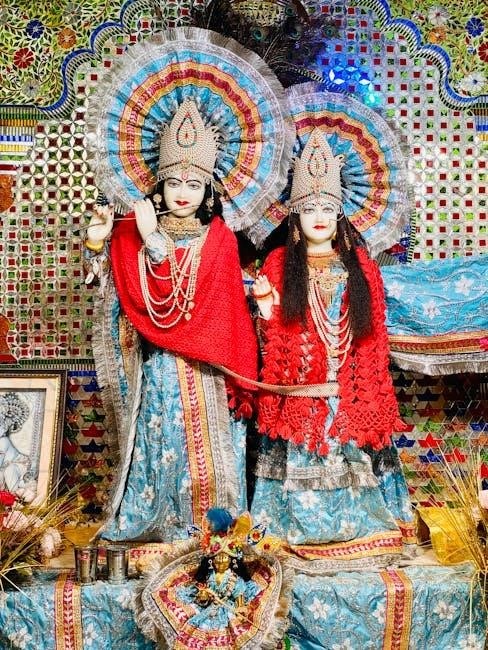
Depicted with multiple faces, limbs, and often riding a ram, Agni embodies transformative power and purification․ He is invoked in numerous Vedic hymns, particularly in the Rigveda, where he is praised for his brilliance and consuming energy․ Comprehensive lists of Hindu deities, frequently found in PDF format, detail Agni’s multifaceted symbolism․
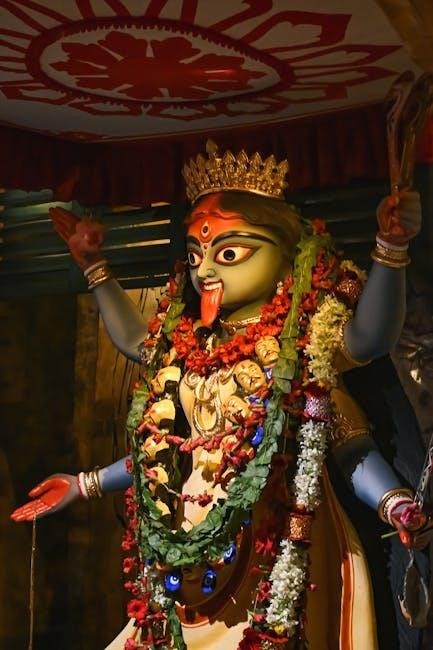
Agni’s role extends beyond sacrifice; he represents knowledge, digestion, and the creative force of the universe․ His presence is essential in ceremonies like weddings and funerals, symbolizing renewal and transcendence․ Studying detailed resources illuminates Agni’s enduring significance within the Hindu tradition․
Varuna: God of Water and Cosmic Order
Varuna, a prominent deity in early Hinduism, embodies the vastness of cosmic waters and upholds Rita – the divine law and cosmic order․ Initially a supreme god in the Rigveda, his importance evolved, yet his role as a guardian of morality and justice remained central․
Often depicted with a noose representing the constraints of cosmic law, Varuna observes and punishes those who violate Rita․ He presides over the oceans, rivers, and all bodies of water, symbolizing the interconnectedness of the universe․ Detailed lists of Hindu gods and goddesses, often available as PDF documents, highlight Varuna’s attributes․
His association with water extends to purification and healing․ While his prominence diminished with the rise of other deities, Varuna continues to be revered as a powerful force maintaining universal balance and ethical conduct, a key aspect detailed in scholarly resources․
Resources for Further Study
Comprehensive PDF lists and online databases offer extensive information on Hindu deities, aiding exploration of this complex pantheon and its rich symbolism․
Availability of Comprehensive PDF Lists
Numerous downloadable PDF documents cataloging Hindu gods and goddesses are readily available online, offering varying levels of detail and organization․ These resources frequently present extensive lists, sometimes categorized by the Trimurti, divine feminine aspects, or secondary deities like Ganesha and Kartikeya․
Many such lists aim to provide a complete overview, though the sheer number of deities—spanning major figures to local and regional variations—means comprehensiveness is a complex goal․
Educational websites often provide these PDFs for free, supporting learning about Hinduism’s intricate theological framework․ However, users should critically evaluate sources, ensuring accuracy and scholarly rigor, as information quality can vary significantly․ Some PDFs accompany academic papers or serve as appendices to larger studies on Hindu mythology and religious practices․
These documents can be invaluable for researchers, students, and anyone seeking a structured understanding of the divine beings within the Hindu tradition․
Online Databases and Websites
Several online platforms offer extensive information on Hindu gods and goddesses, often surpassing the scope of static PDF lists with interactive features and multimedia content․ These databases frequently include detailed profiles, iconography descriptions, associated stories, and regional variations of each deity․
Reliable websites dedicated to Hinduism, mythology, and religious studies provide curated information, ensuring accuracy and scholarly integrity․ Some sites offer searchable databases allowing users to explore deities based on attributes, functions, or associated texts․
While convenient, it’s crucial to prioritize reliable sources, cross-referencing information and verifying claims․ Academic institutions and established Hindu organizations often maintain trustworthy online resources․ Beware of websites with biased or unsubstantiated content․ These digital resources complement PDF documents, offering a dynamic and accessible pathway to understanding the vast Hindu pantheon․
Reliable Sources for Information
Identifying trustworthy sources is paramount when researching Hindu deities, especially when utilizing or supplementing PDF lists․ Academic journals specializing in religious studies and Indology offer peer-reviewed articles providing in-depth analysis․
University websites hosting departments focused on Asian studies often feature faculty research and curated resources․ Reputable publishers specializing in Hinduism, such as Motilal Banarsidass and Penguin Classics, offer scholarly translations and commentaries․
Websites affiliated with established Hindu organizations, like the Hindu American Foundation, generally provide accurate and nuanced information․ Always assess the author’s credentials and the website’s purpose․ Prioritize sources that cite their references and avoid those promoting specific sectarian agendas․ Cross-referencing information across multiple reliable sources ensures a comprehensive and balanced understanding․